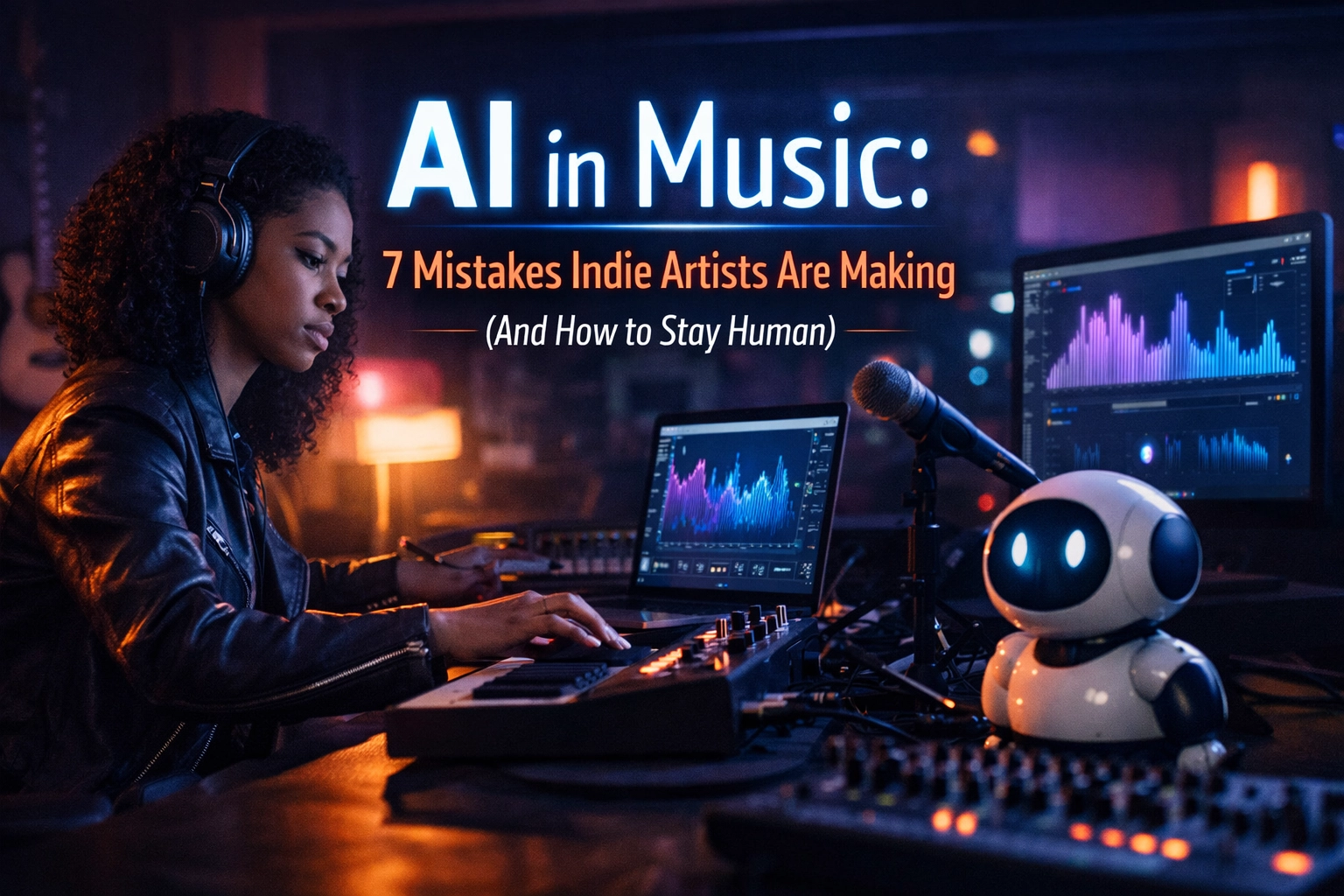
AI is everywhere.
In music production. In vocal processing. In songwriting tools. In distribution strategies.
The question isn't whether to use it. The question is how to use it without erasing what makes you you.
Here's what indie artists get wrong: and how to fix it before the algorithm swallows your soul whole.
Mistake #1: Replacing Performance With Generation
Complete song generation isn't enhancement. It's erasure.
Artists using platforms like Suno or other generative tools to create entire tracks, vocals, and arrangements aren't making music. They're commissioning it. The Velvet Sundown incident proved this: AI-generated songs falsely marketed as human creation destroyed credibility overnight.
The fix: AI enhances what you already performed. It doesn't perform for you.
Use it to nudge timing. Level vocals. Clean up ambient noise. These are production tools, not replacement tools. If you couldn't recreate the vocal on stage, you crossed the line.
Mistake #2: Over-Processing Until Nothing Human Remains
Perfection kills connection.
AI can now synthesize vocals you never sang. Lock timing so tight that groove disappears. Correct pitch so aggressively that your voice becomes unrecognizable plastic.
This isn't production. This is erasure with extra steps.
The fix: Correct what distracts. Leave what connects.
Tools like Melodyne or VocAlign allow subtle corrections without destroying feel. Fix the note that pulls listeners out of the moment. Leave the breath, the grit, the slight pitch waver that makes the vocal yours. Audiences connect to intention and vulnerability, not flawless execution.
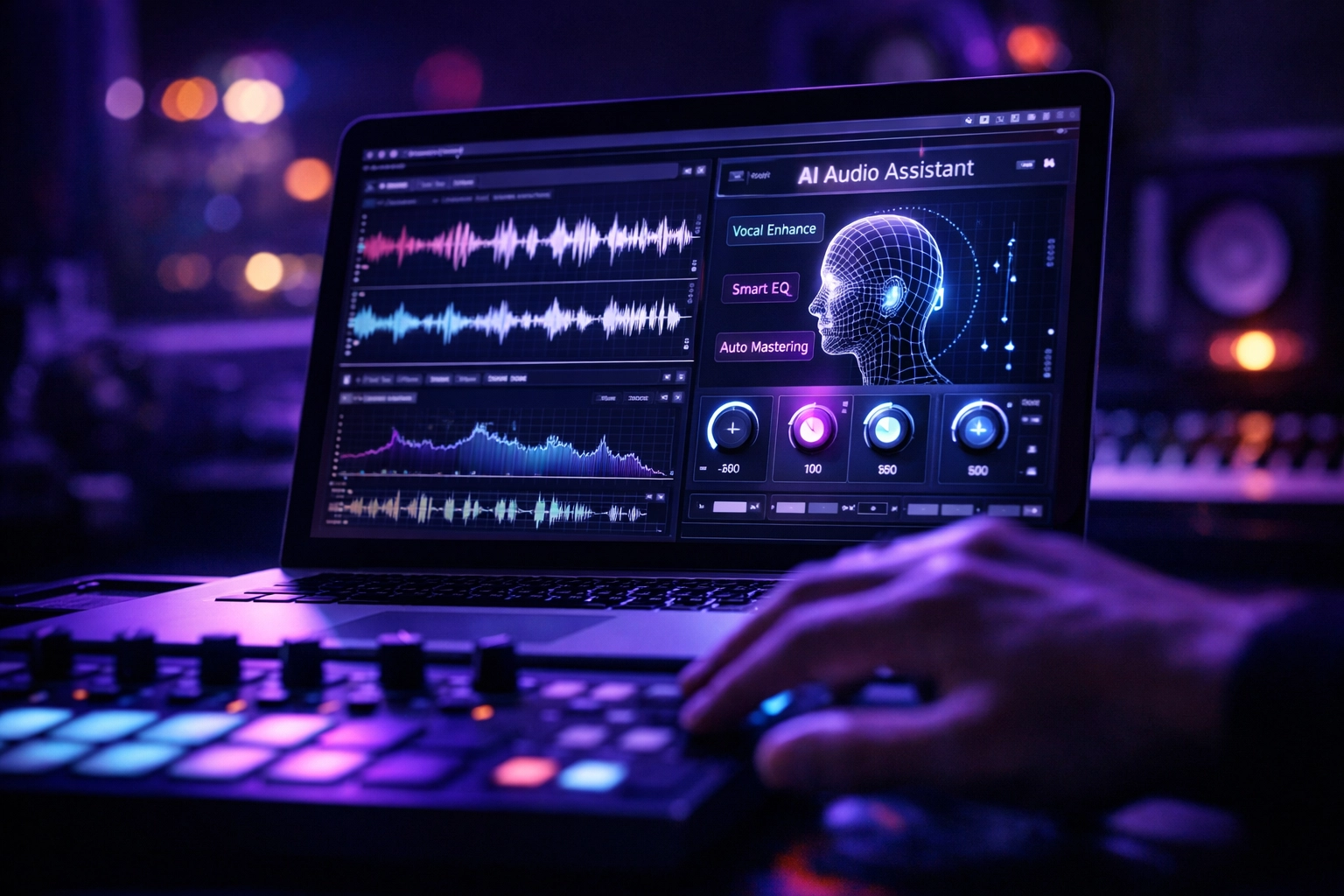
Mistake #3: Optimizing For Algorithms Instead Of Ears
Loudness wars are nothing new. AI just made them surgical.
Artists use dynamic processing to meet platform targets while destroying internal emotional contrast. The verse hits the same volume as the chorus. The bridge feels identical to the intro. Everything screams at the same decibel level until nothing stands out.
Listeners detect this. They feel the emotional disconnect even if they can't name it.
The fix: Serve the song, not the algorithm.
Dynamic range creates emotional arc. Quiet moments make loud moments hit harder. Use AI tools to analyze your mix, but let human ears make the final call. Beautiful Disaster Records built its reputation on Music Beyond the Ordinary: that means emotional honesty over platform compliance.
Mistake #4: Confusing Authenticity With Tool Rejection
82% of producers avoid AI citing artistic integrity concerns.
Most of them misunderstand what maintains it.
The issue isn't using AI. The issue is what you use it for. Auto-Tune didn't kill authenticity: artists who used it to mask inability did. Drum machines didn't kill groove: producers who ignored feel did.
The fix: Tools don't determine authenticity. Intention does.
AI offers independent artists access to production polish previously reserved for major label budgets. Use it. Just ensure the finished recording reflects a performance you actually gave. Enhancement, not fabrication.
Mistake #5: Letting AI Write Your Story
Generative AI can produce lyrics. Chord progressions. Melody lines. Entire arrangements.
None of them tell your story.
Artists using AI songwriting tools as primary creators end up with technically correct songs that feel like everyone and no one. The lyrics scan properly. The chord changes work. The structure follows conventional wisdom.
And none of it matters because there's no soul behind it.
The fix: Use AI as a collaborator, not a replacement.
Stuck on a bridge? Let AI suggest options. Can't find the right word? Generate alternatives. But the core story, the emotional truth, the lived experience: that comes from you. Our collective exists because authentic voices matter. AI can't replicate that.
Mistake #6: Ignoring The Imperfections That Create Magic
Digital perfection is a trap.
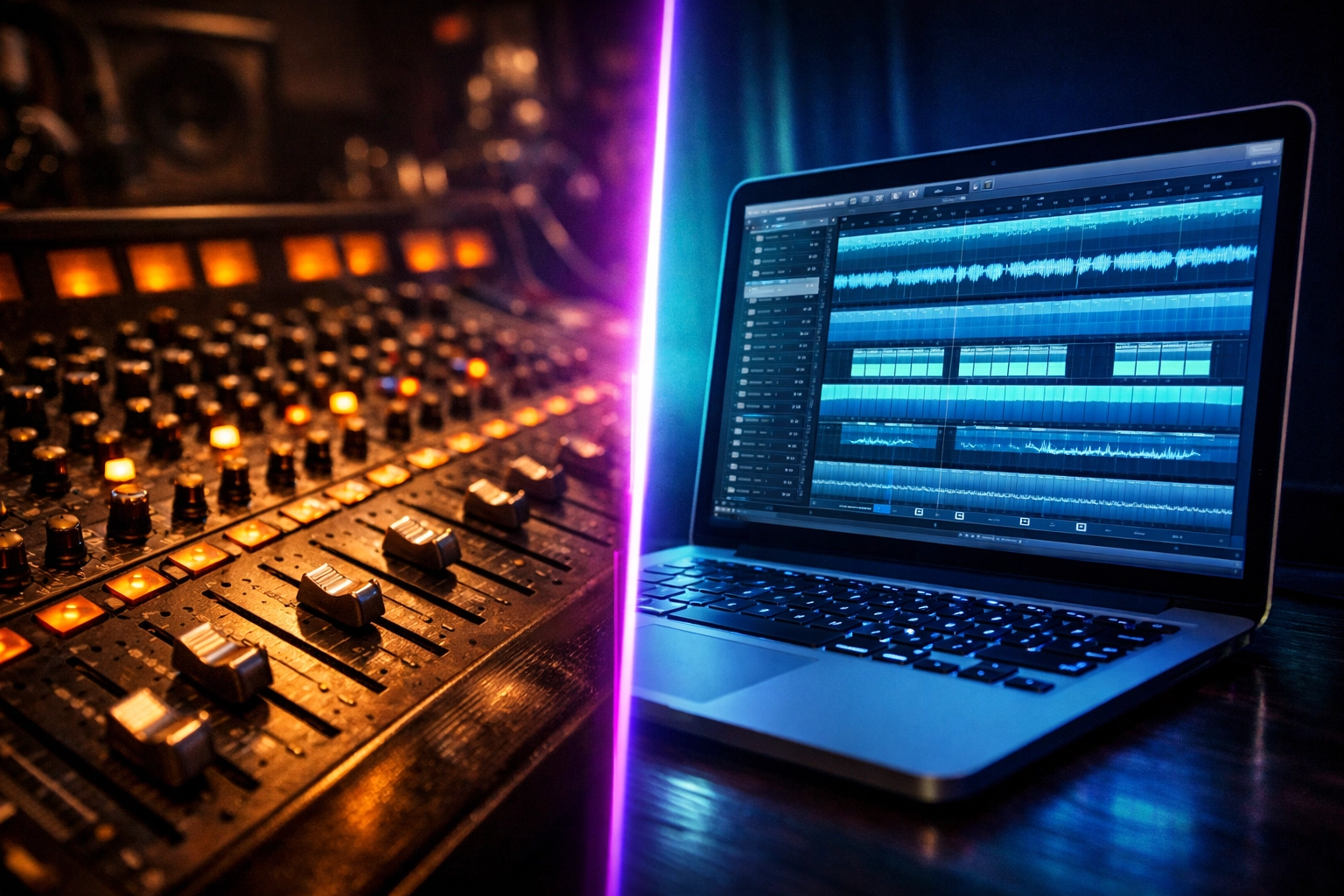
The slight tempo push in the chorus. The breath between phrases. The guitarist's finger sliding on the string. The barely-audible room tone. These aren't mistakes. They're humanity.
AI tools flag them as errors. Correct them automatically. Erase them from existence.
And in doing so, erase the very thing that makes music connect.
The fix: Protect the imperfections intentionally.
Before processing, identify what makes the take special. Mark it. Protect it. When AI suggests corrections, ask whether they serve the emotional core or just the technical standard. Some of the most powerful recordings in history are technically "flawed": and unforgettable because of it.
Mistake #7: Neglecting Community While Chasing Technology
AI handles distribution. Marketing analytics. Playlist pitching. Social media scheduling.
It can't build genuine connection.
Artists who automate every fan interaction end up with metrics but no movement. Followers but no community. Streams but no supporters.
Technology can't replace showing up. Responding authentically. Building relationships one conversation at a time.
The fix: Automate logistics, not relationships.
Use AI for scheduling and analytics. Handle fan conversations yourself. Reply to comments. Show up in DMs. Remember that every number represents a human who chose to spend time with your art. Born Crowned works because it's built on genuine collective power, not algorithmic optimization.
The Bottom Line
AI isn't the enemy. Mindless adoption is.
Use it to enhance what you create, not replace why you create it. Let it handle technical heavy lifting so you can focus on emotional truth. Deploy it for logistics while you build genuine connection.
The artists who win won't be the ones who reject technology entirely. They won't be the ones who surrender to it completely.
They'll be the ones who use every available tool in service of something real.
Something imperfect.
Something human.
Something beyond the ordinary.
Drop us a line at Beautiful Disaster Records if you're ready to make music that matters.